
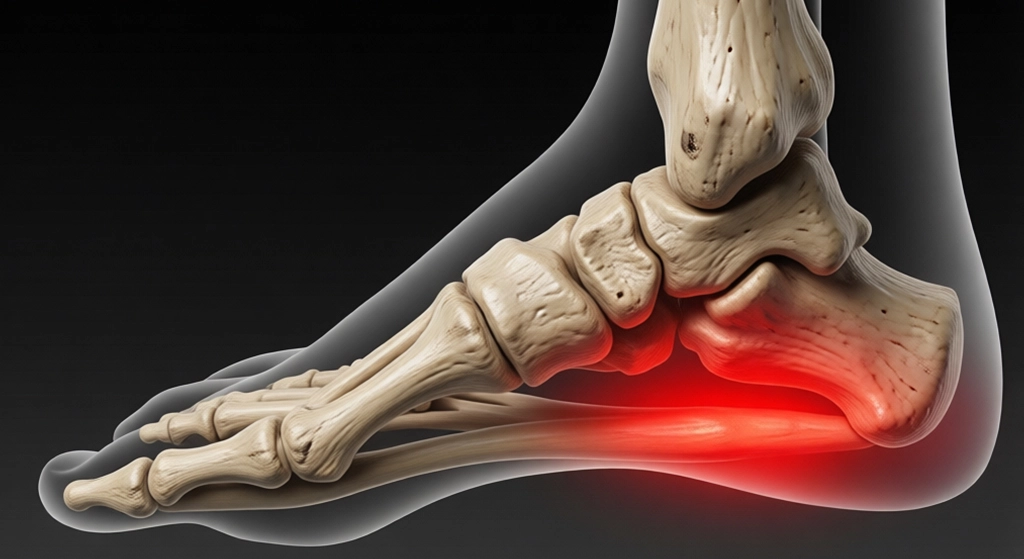
Constant heel pain can make simple activities like walking, exercising, working, or getting out of bed a challenge. It might be time for shockwave therapy if stretching, orthopedic shoes, changing your activity pattern, or other conservative treatment options didn’t work for you, as with persistent shin splints.
This guide aims to provide information on all aspects of shockwave therapy for plantar fasciitis treatment, recent research, and the recovery process.
What Is Shockwave Therapy for Plantar Fasciitis?
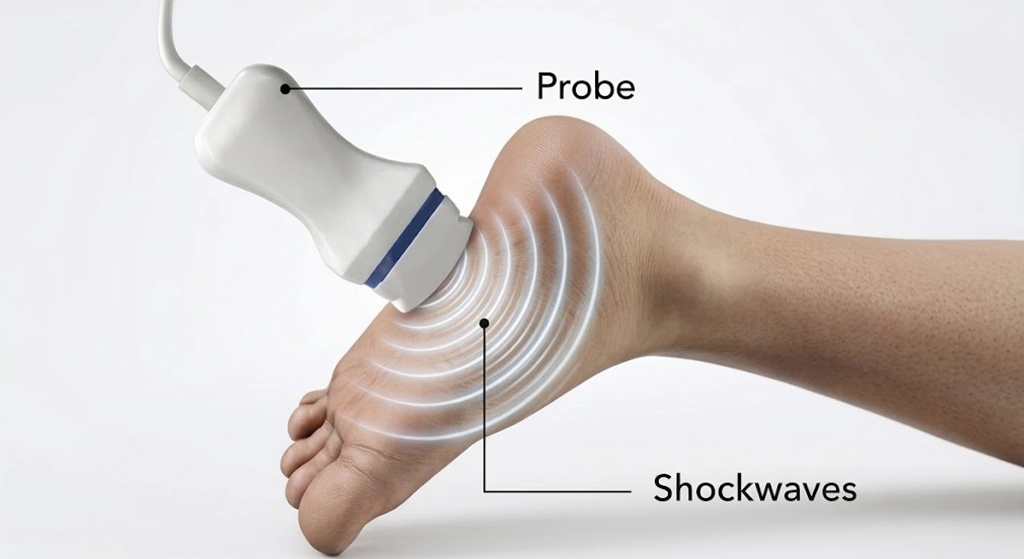
Extracorporeal Shockwave Therapy (ESWT) delivers focused or radial acoustic waves through the skin to the site of chronic injury. In chronic plantar fasciitis, there is nearly no active inflammatory process; rather, healing has stopped (tendinopathy/fasciopathy).
Shockwave therapy aids the body’s own recovery mechanism in the following ways:
- Neovascularization: shockwaves stimulate a release of growth factors such as VEGF, hence promoting formation of new small capillaries that improve blood supply in poorly supplied fascia.
- Calcification elimination: acoustic energy disintegrates micro-calcifications and scant fibrotic scar tissue.
- Hyperstimulation-induced analgesia: pulse waves act on nerve fibers, inhibiting pain stimulus transmission locally.
How Does Shockwave Therapy Work?
Focused vs. Radial Shockwave Therapy
Is Sound Wave or Sonic Therapy the Same Thing?
These terms are sometimes mentioned in connection with acoustic-wave therapy, although it is not meant to imply that they mean different therapies.
Does Shockwave Therapy Work for Plantar Fasciitis? Benefits and Results
- Non-Invasive: There is no need for incisions and stitches and, consequently, the danger of infection and nerve damage is excluded.
- Zero Protracted Downtime: After the procedure, the patient is immediately allowed to go home and resume his or her daily non-strenuous activities without restrictions.
- Targets Root Cause: Unlike painkillers, which mask pain, this treatment actively acts on the damaged tissues, stimulating their natural repair mechanism.
- High Success Rate: Clinical studies show a success rate of 70% to 85% per session, regardless of the patient’s response to conservative treatment.
- Protects Foot Structure: The shock wave therapy does not affect the foot’s anatomy, unlike surgical intervention.
Who Is a Good Candidate for Shockwave Therapy?
When Is Shockwave Therapy Considered?
Extracorporeal shock wave therapy is an alternative when conservative options fail. But it should be part of a broader treatment strategy rather than as a replacement for rehabilitation.
Who Should Not Get Shockwave Therapy?
What to Expect During a Shockwave Therapy Session
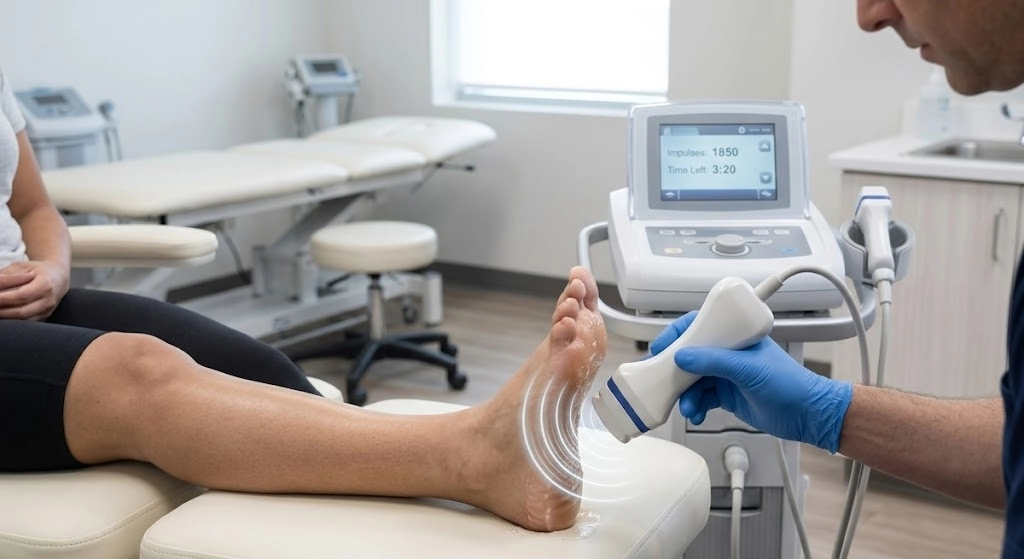
- Preparation: You sit on a chair or lie in bed with your legs in such a way that your heel is up.
- Coupling Gel: Water-based gel is put on your heel to ensure that sound waves travel through the tissues effectively.
- Application: The doctor then puts the applicator used to produce shockwaves near the heel and operates the machine. The shockwave therapy procedure consists of 1,500 to 2,500 impulses in about 5-10 minutes.
- Follow-Up: The course usually consists of 3 to 5 sessions, which take place every week. There’s no downtime after shockwave therapy; the patient is able to leave immediately and resume normal activities except for high-impact physical exercises for 48 hours.
Does Shockwave Therapy Hurt?
A person may feel sore afterward, too. The idea is not to make the session unbearably painful but to share the sensations with the treating specialist.
Recovery After Shockwave Therapy
How Much Does Shockwave Therapy for Plantar Fasciitis Cost?
When seeking the best price, always keep in mind the complete treatment and not just the price of one session. Research about insurance coverage can differ by plan and treatment type. While some policies specify the conditions for coverage of certain procedures, in others ESWT is categorized differently. It is important to contact your insurance company and physician directly about coverage, authorization, and out-of- pocket cost.
What Causes Plantar Fasciitis?
Plantar fasciitis can be defined as a condition whereby the plantar fascia, a tough band of tissue that stretches from the heel to the toes, becomes irritated and undergoes degenerative changes. This structure supports the arch of the foot and diminishes the forces created during walking and running.
The pain is often experienced the most when taking the first steps after waking up and getting out of bed.
It should also be mentioned that heel pain does not always mean that it is a case of plantar fasciitis. Conditions such as nerve irritation, tendon problems, stress injuries, and heel fat-pad problems can cause similar symptoms.
Foot Posture and Type
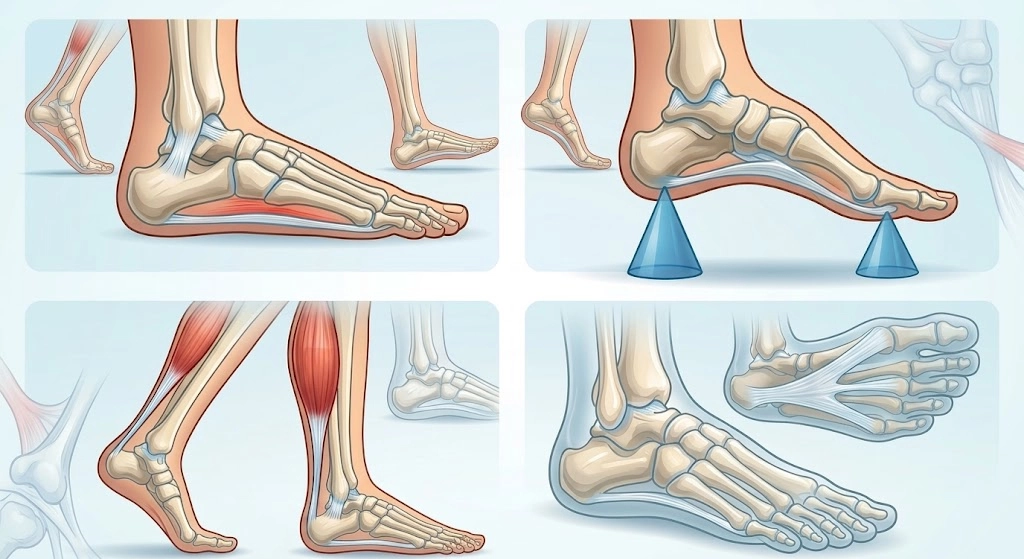
Anatomical variations in foot biomechanics cause uneven stress on the plantar fascia:
- Flat feet (Pes Planus): An abnormally flexible arch or overpronation makes the arch fall flat during the stepping process, putting excessive force on the fascia.
- High arches (Pes Cavus): Inflexible and high arches do not absorb the shock happening during landing and push the force to the heel and forefoot.
- Tight Achilles tendons: Less flexible calf muscles or Achilles tendons change a person’s walking gait in such a way that the ankle cannot bend properly, which leads to excessive load on the fascia.
Other Common Risk Factors of Plantar Fasciitis
- Occupational Strain: Professions that demand prolonged periods of being on your feet, for instance, certain healthcare, retail, or warehouse professions.
- Sudden Increase in Activity: Quick bursts of activity such as an increase in running mileage, jumping exercises, or attempting new forms of exercise all at once.
- Body Weight: The heavier the person, the more impact there is on the arches of the foot due to the strain created when carrying his or her weight.
- Aging: Over time, the tissues lose their elasticity, and the cushioning fat pad beneath one’s heels decreases.
Heel Spurs and Plantar Fasciitis
Heel spurs and plantar fasciitis commonly appear together, but heel spurs do not cause the pain of plantar fasciitis. Both heel spurs and plantar fasciitis arise from the same issue of chronic tension and strain on the plantar fascia.
In fact, many people have heel spurs that are visible in X-rays but do not have any pain. Conversely, severe cases of plantar fasciitis may develop in people who do not have heel spurs.
Plantar Fasciitis Treatment Options
Traditional Treatments and Their Drawbacks
- Rest and Ice: It helps reduce swelling and acute pain but does not solve the problem of micro-tears or biomechanical dysfunction.
- Non-steroidal anti-inflammatory drugs (NSAIDs): It gives you temporary relief from the symptoms. However, long-term intake can lead to gastrointestinal tract issues and cardiovascular system issues. It does not trigger the process of tissue regeneration.
- Stretching and Physical therapy: Different types of stretches help regain the mobility of the foot and eliminate muscle tension, yet one must exercise rigorously for many months.
- Night splints: They keep the foot in a dorsiflexed position while sleeping, which helps prevent morning stiffness. However, there are plenty of patients who stop using them as they experience discomfort while sleeping.
- Corticosteroid injections: They offer immediate relief, yet repeated injections can lead to fat pad atrophy.
Best Footwear for Plantar Fasciitis
- Strong arch support: Assists in maintaining the arch in the mid-stance phase of walking and running.
- Soft midsole: Provides cushioning during the impact that occurs when the heel strikes the ground.
- Slight heel-to-toe drop: Footwear with a little heel lift (10 to 12 mm) reduces tension on the Achilles tendon and plantar fascia when compared to completely flat shoes and walking barefoot.
- Rigid heel counter: Stabilizes the rearfoot area so that it does not excessively pronate.
Other Treatment Options for Plantar Fasciitis
- Custom Orthotics: custom foot inserts that are meant to relieve pressure points and solve the alignment problems.
- Platelet-Rich Plasma injections: injections of the patient’s own platelets that serve as a therapy for damaged fascia.
- Extracorporeal Shockwave Therapy: a non-invasive procedure that uses acoustic waves to facilitate healing of chronic injuries.
- Gastrocnemius Recession or Plantar Fasciotomy: surgical procedures reserved for stubborn cases of plantar fasciitis.
Bottom Line: Is Shockwave Therapy Right for Plantar Fasciitis?
Understanding the condition that affects the patient, treating identified underlying issues, setting realistic expectations, and evaluating the outcome can be just as significant as the course of therapy.
The Miley Clinic Approach to Persistent Heel Pain
Frequently Asked Questions About Shockwave Therapy for Plantar Fasciitis
How many sessions should Shockwave Therapy be done for Plantar Fasciitis?
The course of treatment is normally from 3 to 5 sessions, one per week. The duration of each visit is estimated at 5 to 10 minutes. The number of visits required may vary depending on your individual symptoms and examination findings, as well as the technology used.
How long does it take for Shockwave Therapy to heal Plantar Fasciitis?
There is no specific treatment period. Improvements may be seen during or after the treatment based on symptoms, method of treatment, and response to it.
How to permanently get rid of Plantar Fasciitis?
There is no specific answer. However, certain diagnostic tests, rehabilitation programs, activity control, and finding causes contributing to Plantar Fasciitis may help alleviate the symptoms of the disease.
Medical References
“Clinically relevant effectiveness of focused extracorporeal shock wave therapy in the treatment of chronic plantar fasciitis: a randomized, controlled multicenter study” – PubMed – May 2015
https://pubmed.ncbi.nlm.nih.gov/25948515/
“Evaluation of low-energy extracorporeal shock-wave application for treatment of chronic plantar fasciitis” – PubMed – Mar 2002 https://pubmed.ncbi.nlm.nih.gov/11886900/