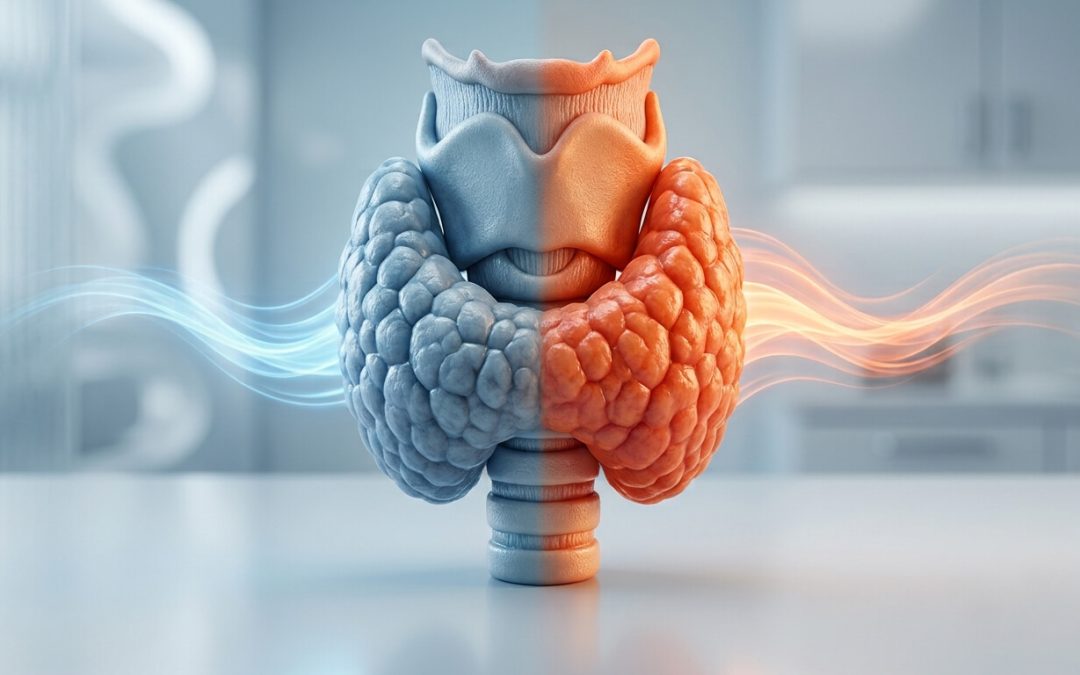
The thyroid may be small, but it is responsible for multiple important functions in the body. Located at the base of the neck, the butterfly-shaped gland serves as a thermostat and engine in one. Under normal conditions, the thyroid is hardly noticeable, and when it produces excessive amounts of hormones, all body systems suffer.
There are two main issues that the thyroid might experience—underactive thyroid (hypothyroidism) and overactive thyroid (hyperthyroidism). Despite being associated with the same organ, these conditions occupy different places in the metabolism spectrum. Knowing the basic differences between hypothyroidism and hyperthyroidism is essential for timely detection of warning signs and seeking the necessary medical attention.
The text covers everything that one should know about the diseases that the thyroid can experience in terms of their symptoms, causes, and means of diagnosis.
How Does the Thyroid Gland Function?
Before examining the differences, it’s helpful to understand what the thyroid gland does. The thyroid gland produces two vital metabolic hormones: triiodothyronine (T3) and thyroxine (T4).

These hormones travel through the body via blood and direct energy usage in the cells. The thyroid regulates several fundamental mechanisms:
- Basal Metabolic Rate: How quickly the body burns calories to make energy.
- Heart Rate and Blood Circulation: How fast and forcefully the heart beats.
- Body Temperature: How the body copes with heat and cold.
- Digestive Processes and Gut Motility: How fast food passes through your digestive tract.
- Brain and Nervous System Function: Mental clarity, mood stability, and reflexes.
The pituitary gland, located at the base of the brain, keeps track of hormones in the blood. If their levels drop, the gland releases thyroid-stimulating hormone (TSH) signals. Otherwise, it slows down the production of TSH.
What is Hypothyroidism?
Hypothyroidism is simply an underactive thyroid. In other words, hypothyroidism is when the thyroid gland does not produce enough T3 and T4 hormones needed to meet the body’s metabolic needs. When hormone levels drop, cellular activity slows down in the body overall.
Common Symptoms of Hypothyroidism
As the natural process of metabolism slows down, symptoms typically manifest as physical and mental sluggishness. They can be mistaken for signs of stress and aging because of their gradual onset over a period of time.
Some of the symptoms are as follows:
- Persistent Fatigue: Feeling tired after sleeping for 8-9 hours.
- Unexplained Weight Gain: Gaining weight without modifying the diet or activity level.
- Cold Intolerance: Feeling colder than others in a room, especially in the hands and the feet.
- Brain Fog and Memory Problems: Slow mental processes and difficulty concentrating.
- Constipation: Slow GI transit causing either pain during elimination or making it hard to eliminate waste.
- Skin Dryness and Hair Brittleness: Skin being dry and rough, and hair thinning out or falling out.
- Muscle Weakness and Joint Pain: Feeling stiffness in joints and losing muscle strength.
- Slow Heartbeat (Bradycardia): A resting heartbeat being slower than normal.
- Heavy or Erratic Periods: Experiencing irregular or heavy menstrual periods in women.
What is Hyperthyroidism?
Hyperthyroidism can be defined as an overactive thyroid gland. In this condition, the organ produces excessive T3 and T4 hormones that enter the bloodstream. Once the levels of the hormones increase, the metabolic engine of the organism works hard.

Signs of Excess Thyroid Activity
Symptoms generated by an overactive thyroid tend to be high-strung, strong, and uncomfortable. If hyperthyroid symptoms are detected early on, one can avoid serious complications:
- Unwanted Weight Loss: Despite having an increased appetite or eating more food than usual, there is unexpected weight loss.
- Rapid Heartbeat (Tachycardia): An uncharacteristic flutter in the chest with a heart rate of more than 100 beats per minute
- Heat Intolerance and Being Sweaty: Feeling warm and perspiring heavily even in moderate conditions.
- Anxiety, Nervousness, and Irritability: Being unable to stay calm without an obvious stressor.
- Tremors on Hands: A minor degree of trembling in the hands and fingers.
- Frequent Bowel Movements: Increased metabolism leading to loose stools or diarrhea.
- Insomnia and Sleeping Problems: Finding it difficult to sleep and rest normally due to physical restlessness and a racing heart.
- Fragile Nails and Thinning Skin: Skin becoming unbelievably smooth and thin, while fingernails are fragile.
- Light or Missed Menstrual Periods: Women may experience significantly lighter periods or missed cycles.
Causes of Hypothyroidism and Hyperthyroidism
Causes of Hypothyroidism
There are many reasons why hypothyroidism can occur; however, damage to the thyroid or other conditions that disrupt hormone production would be most relevant to such a diagnosis.
- Hashimoto’s Syndrome: It is an autoimmune disorder where the body’s immune system mistakenly attacks the thyroid. It causes long-term inflammation and reduced functionality of the gland in the process. It happens to be the most common reason for hypothyroidism in industrialized countries.
- Medical Intervention: Surgical removal of the thyroid or treatment with radiation frequently results in an underactive thyroid.
- Experiencing Radiation Therapy: The treatment associated with head or neck cancer could lead to damage to the thyroid.
- Certain Medication: Medications such as lithium (used for psychiatric conditions) or amiodarone (used for heart arrhythmias) could also lead to the disruption of the normal function of the thyroid.
- Lack of Iodine: The thyroid requires iodine to build T3 and T4. Despite being a rare occurrence in the regions where iodized salt is used, iodine deficiency remains one of the main reasons for hypothyroidism in the world.
- Pituitary Gland Dysfunction: A rare condition where a benign tumor on the pituitary prevents it from producing TSH, leading to a healthy but uninfluenced thyroid.
Causes of Hyperthyroidism
Hyperthyroidism results from conditions that stimulate the thyroid gland to excessive hormone production.
- Graves’ Disease: It is an autoimmune disease that results in the production of antibodies (thyroid-stimulating immunoglobulins) that mimic TSH and stimulate the thyroid to produce more hormones.
- Toxic Nodular or Multinodular Goiter: Lumps or nodules develop in the thyroid gland and act autonomously, leading to the production of excess thyroid hormones without any orders from the pituitary.
- Thyroiditis: Usually refers to inflammation of the thyroid gland (for example, due to viral infections or postpartum changes), leading to the release of the stored thyroid hormones into the blood in large amounts.
- Excessive Iodine Intake: Consumption of excess iodine in the case of its supplementation or usage of certain medical dyes can lead to hyperthyroidism.
Diagnosis of Hypothyroidism
If you were wondering how to diagnose hypothyroidism, know that it is impossible to do so based on symptoms alone because they overlap with those of many other conditions. Hypothyroidism is diagnosed with blood tests and clinical evaluation.
Types of Blood Tests Used in Diagnosis:
- Thyroid-Stimulating Hormone (TSH) Test: A TSH test is the most important thyroid function test. High TSH indicates hypothyroidism. The pituitary gland is producing too much TSH and is trying to stimulate the sluggish thyroid. Low TSH indicates hyperthyroidism. The pituitary detects too much thyroid hormone in the blood and stops TSH production.
- Free T4 Test: This test measures the level of T4 hormone in the blood that does not bind to proteins in the blood. Low Free T4 and high TSH mean that there is primary hypothyroidism.
- Free T3 Test: This test is generally helpful in diagnosing hyperthyroidism since T3 levels rise first.
- Thyroid Antibody Tests: These include the tests for thyroid peroxidase (TPO) antibodies or thyroglobulin antibodies to establish whether an autoimmune cause like Hashimoto’s or Graves’ disease is present.
Imaging and Secondary Diagnostics
If blood tests indicate abnormal functioning of the thyroid or if your physician suspects that the thyroid gland is enlarged during the physical exam, the doctor may order the following:
- Thyroid Ultrasound: Uses sound waves to picture the thyroid gland and determine the presence of nodules, inflammation, or any abnormality in the structure of the gland.
- Radioactive Iodine Uptake (RAIU) scan: Measures the amount of iodine absorbed by the thyroid after taking a small dose orally. Higher absorption signifies Graves’ disease or toxic nodules, whereas a lower amount points to thyroiditis.
Final Thought
Regardless of the speed at which your body’s metabolism operates, thyroid disorders need not inhibit your day-to-day existence. It can be difficult to identify the symptoms of both hyperthyroidism and hypothyroidism as they manifest slowly, leading people to dismiss them as simply being tired, stressed, and older. However, failing to recognize these conditions can place excessive pressure on the body, heart, and overall health.
So how does one know when thyroid disorders are at play? The answer is simple: a quick TSH blood test provides the necessary information. If you have been experiencing persistent alterations in your weight, energy levels, mood, or heart rate, then seeking the advice of a healthcare specialist can ensure efficient treatment is undertaken.
FAQ
Can you have hyperthyroidism and hypothyroidism at the same time?
No, not simultaneously, but they may occur one after another. Both conditions can be harmful if left untreated. Hyperthyroidism can lead to sudden heart issues, while untreated severe hypothyroidism can lead to myxedema coma.
Between hyperthyroidism and hypothyroidism, which condition is worse?
Neither condition is inherently more dangerous than the other. Untreated hyperthyroidism causes sudden dangers to the heart, while unmanaged severe hypothyroidism leads to slow metabolic failure.
Medical References
- Hypothyroidism (Underactive Thyroid) — Overview, Causes & Treatment” — National Institute of Diabetes and Digestive and Kidney Diseases – Oct 03, 2025
https://www.niddk.nih.gov/health-information/endocrine-diseases/hypothyroidism - “Hyperthyroidism (Overactive Thyroid)—Overview, Causes & Treatment”—National Institute of Diabetes and Digestive and Kidney Diseases – Oct 06, 2025
https://www.niddk.nih.gov/health-information/endocrine-diseases/hyperthyroidism - “Thyroid Patient Information & Guides” — American Thyroid Association – Jan 27, 2026
https://www.thyroid.org/thyroid-information/ - “Thyroid Disease Diminishes Quality of Life: Types & Symptoms” — Mayo Clinic Health System – Feb 05, 2015
https://www.mayoclinichealthsystem.org/hometown-health/speaking-of-health/thyroid-disease-diminishes-quality-of-life. - “Hyperthyroidism vs. Hypothyroidism: Here’s How to Tell the Difference” — Hartford HealthCare – Apr 29, 2021
https://hartfordhealthcare.org/about-us/news-press/news-detail?articleid=32994&publicId=395